On 17 September 2026, the European Parliament adopted a resolution on the evaluation and future of the Common Fisheries Policy (CFP). Despite (several) calls from the European Anglers Alliance (EAA) to address the longstanding gap in EU fisheries policy of non-inclusion of marine recreational fisheries, the final text gives no meaningful recognition to marine recreational fisheries.
The EAA had urged MEPs to reject the final text because an official position of the EU Parliament about the future of EU fisheries that overlooks the recreational fisheries sector is unacceptable for EAA.
Why this vote mattered to Europe’s anglers?
The EU Common Fisheries Policy (CFP) is the EU’s main framework for managing fisheries and fish stocks.
In this year’s first semester, the European Commission published an evaluation of the overall functioning CFP since its last reform in 2013 – which has opened a discussion about how that framework should further develop.
For anglers, both the Commission’s evaluation and the Parliament’s resolution are opportunities to address a clear imbalance: recreational fisheries are barely covered by the CFP’s main regulation, yet decisions made under EU fisheries rules can directly affect where, when, what and how they may fish. Clear examples are e.g. the introduction of catch registration obligations under the EU’s Control Regulation, the annual bag limits/seasonal closures/… for certain fish species (e.g. Cod, Atlantic salmon, eel), sometimes area closures like in Germany and wider stock management inefficiencies that damage our seas, our fish stocks and our fisheries.
Marine recreational fishing makes a substantial contribution to Europe’s coastal communities:
- Around nine million sea anglers
- Approximately €10.5 billion in total economic activity
- Around 100,000 full-time equivalent jobs
These figures tell only part of the story. Angling also connects people with the sea and gives them a stake in healthy fish stocks and habitats. Its contribution should be considered when EU fisheries policy is assessed and developed.
A missed opportunity for the EU Parliament
Following the publication of the European Commission’s evaluation of the Common Fisheries Policy, the European Parliament decided to hold a plenary debate and adopt a resolution on the evaluation and its follow-up.
July 2026 – anglers’ contribution raised in Parliament
During the plenary debate on the Commission’s evaluation, MEP Sofie Eriksson (Sweden, S&D) called for recreational fisheries to become an integral part of the CFP – as underlined by EAA since many years.
Drawing on Sweden’s experience, MEP Eriksson spoke about anglers’ economic contribution, their support for local communities and their connection to aquatic ecosystems. As she put it: “Sport fishing should be a given part of the Common Fisheries Policy.”
You can watch Ms Eriksson’s intervention during the EU Parliament’s debate via the link below:
- Video recording: Sitting of 09-07-2026 | Plenary | European Parliament (Sofie Eriksson’s intervention starts at 10:41:42)
- Minutes of Ms. Eriksson’s speech can be found via this link.
September 2026 – Parliament adopts the resolution
As Parliament prepared its resolution, EAA sent proposed wording for the text to key stakeholders in the EU Parliament. We asked the EU Parliament to recognise marine recreational fisheries as part of EU fisheries policy and to take proper account of the sector’s social and economic contribution.
Our message to MEPs was clear: Anglers support the protection of vulnerable fish stocks, contribute heavily to the EU’s Blue Economy and the socio-economic development of coastal communities. This is why our sector needs a voice in decisions that affect us – hence the need & urgency of including the recreational fisheries sector in the Common Fisheries Policy’s scope.
None of these proposals was included in the final text. The EAA therefore urged MEPs to reject the resolution.
The EU Parliament – nevertheless – adopted the text by 368 votes in favour, 172 against and 69 abstentions.
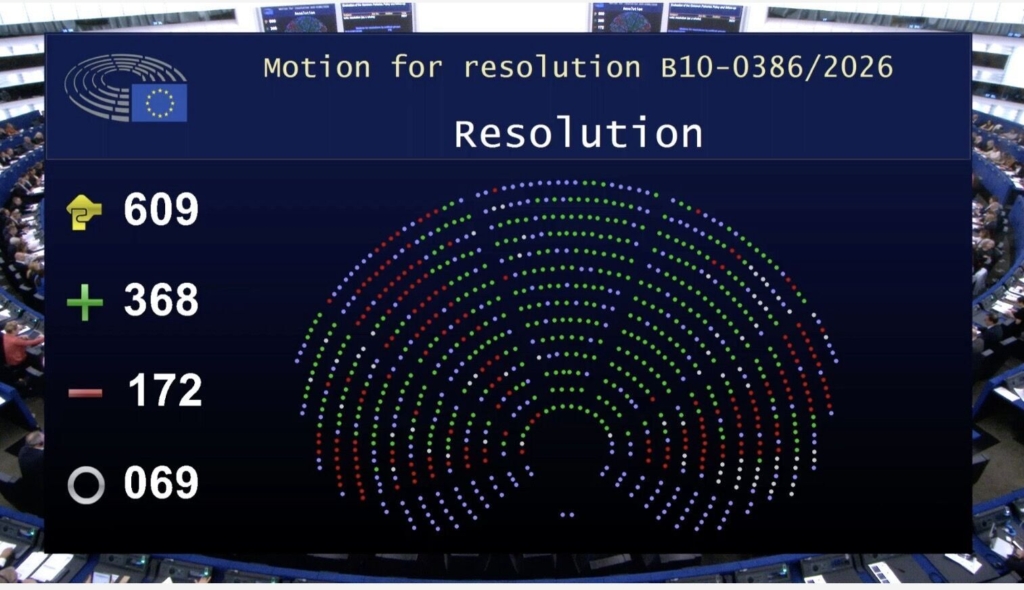
This result leaves a central question unanswered: how can the CFP reflect the full picture of European fisheries while excluding millions of sea anglers from its main policy framework?
The Commission has recognised the gap
The Commission’s CFP evaluation has acknowledged that recreational fisheries are addressed mainly through secondary legislation, and raises the question of whether the main regulation (the CFP) needs “more substantive provisions” on our sector/activity. Combined with a “lack of formal recognition, limited mapping, insufficient data collection & inconsistent governance” of recreational fisheries, this puts the CFP’s relevance at risk – according to the Commission’s evaluation.
These findings reflect concerns raised by the EAA and its members, as well as several EU Advisory Councils (produced as part of the Common Fisheries Policy – CFP), including those for the Baltic Sea, North Sea & North Western Waters and Mediterranean.
The EU Parliament had an opportunity to respond to the Commission’s own assessment, calls from the sector & advisory councils – by recognising marine recreational fisheries in its resolution. It did not.
What the EAA wants from the CFP
The EAA calls for a Common Fisheries Policy that fully includes marine recreational fisheries and manages shared fish stocks sustainably. Recognition must lead to practical changes in how the sector is measured, represented and considered by EU legislation.
The EAA’s priorities are:
- Recognise marine recreational fisheries as part of the CFP, alongside other fishing sectors.
- Give anglers meaningful representation in fisheries decisions.
- Improve data on participation, catches and the sector’s social and economic contribution.
- Develop management objectives that reflect recreational fisheries.
- Apply transparent environmental, social and economic criteria when allocating fishing opportunities, in line with Article 17 of the CFP.
Next steps
The resolution sets out Parliament’s formally adopted position on the CFP evaluation and its follow-up. It is a political statement: it does not amend the CFP Regulation or create new legal obligations. The Commission can still address the gaps it identified as it considers the future of EU fisheries policy.
The EAA will continue to press for marine recreational fisheries to be recognised in that work. This means giving anglers a meaningful voice in decisions, improving data on the sector and regularly assessing its social and economic contribution.
Further information
- European Parliament resolution on the evaluation of the Common Fisheries Policy
- Results of the final roll-call vote
- Video recording of the plenary debate of 9 July 2026
- Verbatim report of the plenary debate
EAA position on the EU Common Fisheries Policy (CFP):