Sharkatag 2026 – organised by EAA member Sportvisunie – was again a great success! During the public day on Wednesday 08 July, 126 sharks were caught. On Thursday 09 July , 326 sharks and 5 rays were caught, followed by a further 341 sharks and 2 rays on Friday 10 July.
In addition to these excellent results, the event received a great deal of media attention. All the sharks and rays caught have been examined and are providing valuable data on these remarkable marine creatures. In this way, Sharkatag contributes to greater knowledge and better protection of the sharks and rays found along the Dutch coast.
Anglers help researchers
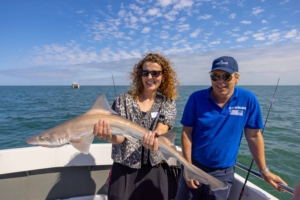
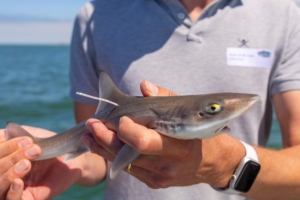
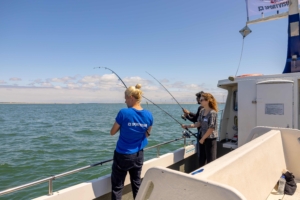
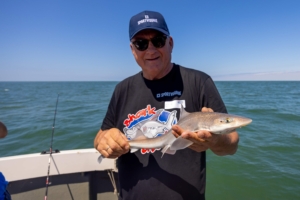
From Wednesday 8 July, recreational anglers boarded boats for three consecutive days to take part in the unique shark research project organised by EAA member Sportvisunie (NL) and its partners. Around ten participants travelled on each charter boat. Under the supervision of researchers, the sharks and rays caught were measured, tagged and released back into the sea. This is helping to gather more and more knowledge about the distribution, growth and survival of sharks in Dutch coastal waters.
About SHARKATAG
Sharkatag is an initiative of Sportvisunie and Wageningen Marine Research. The project is made possible thanks to funding from Rijkswaterstaat, LIFE IP Deltanatuur and the World Wildlife Fund. In addition, there is close collaboration with the Dutch Charter Association, recreational anglers and commercial fishermen. The aim of the research is to gain a better understanding of the presence and behaviour of sharks and rays in the North Sea. The data collected during Sharkatag will contribute to a better understanding and improved protection of these species.
By 2026, more than 5,000 adult spotted smooth-hound sharks had already been tagged as part of the multi-year research programme. Thanks to reports of catches of these fish, a vast amount of new knowledge has been gained about sharks in the North Sea. Niels Brevé, shark researcher at the Sportvisunie:
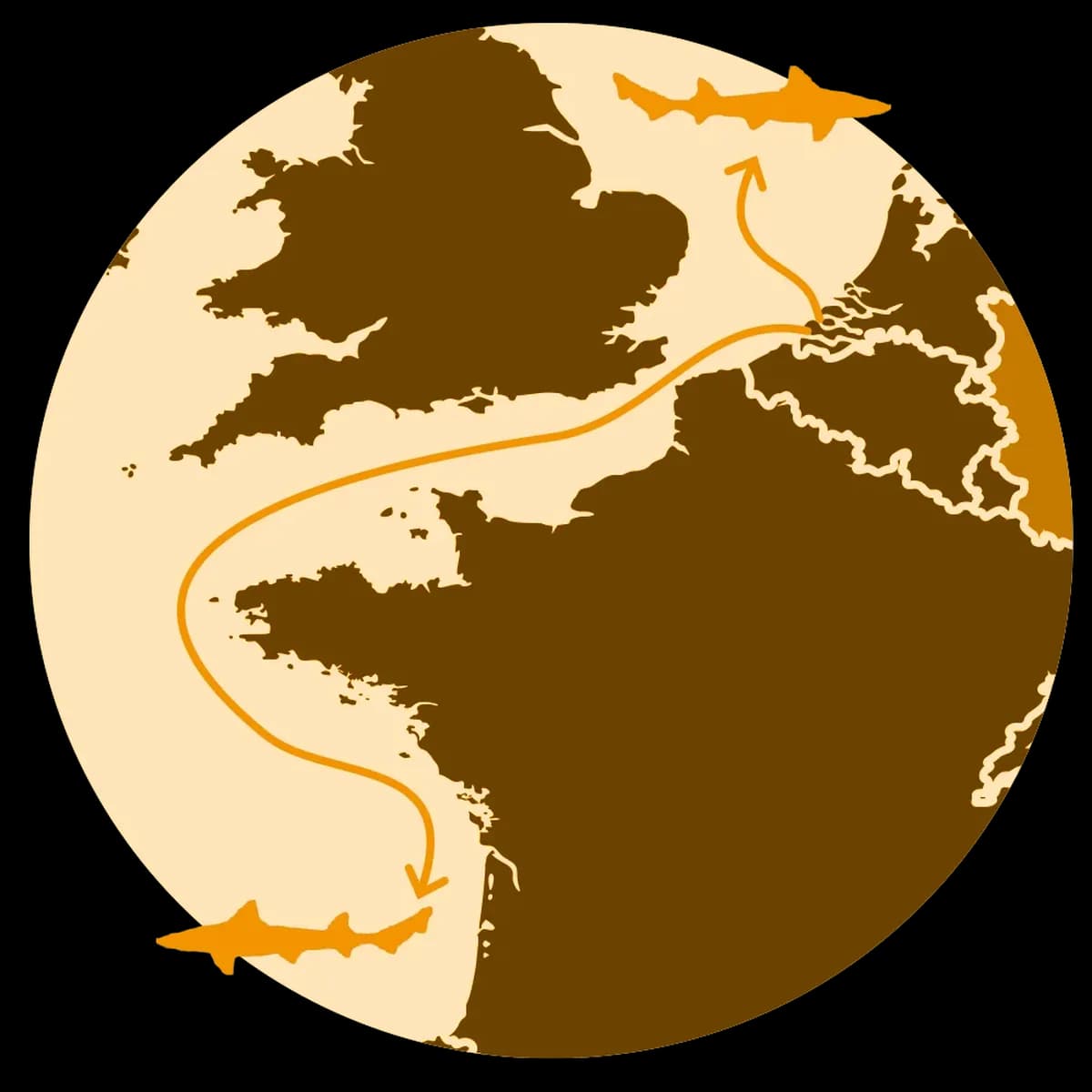
“For example, we have observed a striking migration pattern: in autumn, adult females migrate mainly southwards (towards the English Channel and beyond, even as far as northern Spain), whilst some of the males – particularly the largest specimens – swim northwards (towards Scotland and Norway).
It is possible that the females seek out slightly warmer waters to accelerate the development of their young. Males, of course, do not need this and can stay closer to home or even move to the northern North Sea.”
In the spring, all the sharks reappear in the Voordelta. “It is striking that they then often return to the exact same location where they were previously caught, tagged and released for the research.”
More information on the project: Sharkatag: onderzoek naar haaien en roggen | Sportvisunie
SHARKATAG 2026 – great media coverage (also by “fishfluencers!)
Sharkatag 2026 attracted a great deal of media interest. Among others, the NOS and Omroep Zeeland were present to report on the event and highlight the importance of the research. Click below to view the various videos, audio clips and news reports:
- Sharkatag in het NOS Journaal 9 juli 2026 | NPO Start (item vanaf minuut 11:53)
- NOS Radio 1 Journaal 9 juli 2026 (item vanaf minuut 1:52:06 en 3:16:47)
- NOS Jeugdjournaal – Steeds meer haaien geboren in de Noordzee: ‘We willen ze beschermen’
- NOS Stories – Er zijn steeds meer haaien in Nederland
- Omroep Zeeland nieuwsuitzending 9 juli 2026 (item vanaf minuut 4:08)
- Omroep Zeeland – Haaien rukken op voor de Zeeuwse kust: ‘Je hoeft er niet bang voor te zijn’
- Reformatorisch Dagblad – Ivo (13) vangt haaien in de Oosterschelde: „De haai is helemaal terug aan de Nederlandse kust”
Daniël Hop, better known on social media (e.g. Youtube) as influencer ‘Vismeester’, was also on board on the first day of Sharkatag at the invitation of the Sportvisunie. Last Sunday at 5.00 pm, a new vlog about this special day of fishing and research was posted on his YouTube channel. Watch it below:
Invitation to anglers: report your catch!
When an individual anglers has caught a shark, dogfish or ray – or if they have returned (catch-and-release) a tagged specimen – they are Reports of tagged sharks, dogfish and rays are rewarded and directly contribute to better research and protection.
This reporting can be done on Sportvisunie’s website: Honderden haaien gevangen tijdens Sharkatag 2026 | de Sportvisunie
Pictures
Sources & further reading
Honderden haaien gevangen tijdens Sharkatag 2026 | de Sportvisunie