Baltic cod
Recreational fisheries of cod shall be prohibited in subdivision 24 beyond six nautical miles measured from the baselines, and in subdivisions 25 and 26 (Eastern Baltic cod).
Due to the fragility of the stocks, the Commission agreed to establish “accompanying measures”, such as spawning closures and restrictions for recreational fisheries.

The European Anglers Alliance (EAA) welcomes fishing restrictions for cod in spawning areas, including commercial fisheries (unless few exceptions). Nevertheless, anglers stand for alternative and more efficient management measures, such as the introduction of a maximum landing size to protect the so-called “super spawners”, as well as increasing the existing minimum landing size.
Baltic Salmon
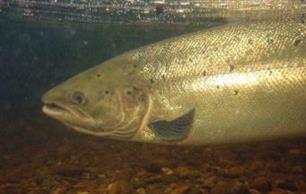
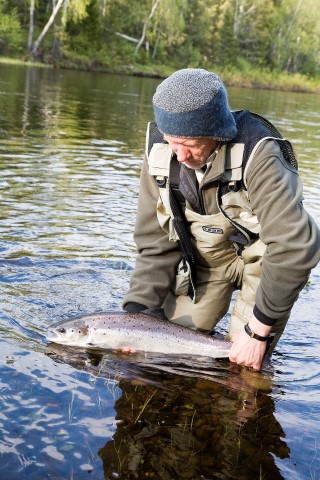
For Salmon, the general provision is that “recreational fisheries of salmon, including catch-and-release fishing of salmon, shall be prohibited in subdivisions 22 to 31. Any specimen of salmon accidentally caught shall be released back into the sea immediately”. The EAA regrets that this general provision includes a blanket prohibition of catch and release.
However, the Commission’s proposal includes some derogations provided that the following cumulative conditions are gathered:
- No more than one specimen of adipose fin-clipped salmon may be caught and retained per recreational fisher per day. This is not in line with one of the European Anglers Alliance (EAA) proposals: EAA supports a bag limit of one salmon (wild or stocked) per day per angler south of latitude 59.30 N but does not agree with the proposal of one fin clipped salmon as this measure is not based on an appropriate mortality study of released Baltic salmon.
- All specimens of any fish species retained shall be landed whole. Even though EAA considers that this should only apply to salmonids (salmon and sea trout), it does not seem to be justified for other species, such as pike, perch and pikeperch.
EAA also considers that recreational trolling north of 59.30 N should be subject to member state regulation and not be unnecessarily regulated by a 4 nm boundary.
Concerning the commercial fisheries opportunities, and based on the ICES advice, the Commission agreed to maintain the TAC as in 2022 and all the “accompanying measures from the 2022 fishing opportunities”. This means that the TACs for the main Basin Salmon and the Gulf of Finland Salmon remain respectively at 63811 and 9455 specimens.
EAA members had called for a strong management of salmon in the Baltic Sea region due to a shared analysis with ICES that the existing current management involves a risk for extinction of several weak river salmon stocks. Particular attention must be paid to migration obstacles caused by hydropower plants and lack of spawning habitats (among other causes).
Lastly, it should not be forgotten that for salmon and cod as well as other important species such as eel, the Cormorant issue remains unsolved and the European Commission lacks a clear strategy to effectively respond to Cormorants impact on our decreasing fish stocks.
Link to the Commission’s proposal for the 2023 TACs and quotas in the Baltic Sea
Link to the Commission’s press release