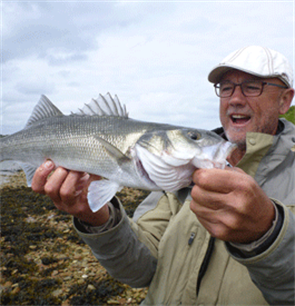
On 10 December, the European Union and the United Kingdom reached an agreement on fishing opportunities for 2026, covering more than 95 Total Allowable Catches (TACs) across the North-East Atlantic. A key outcome for recreational fishers is the long-awaited improvement in sea bass rules, with an increased bag limit to 3 bass species/angler.
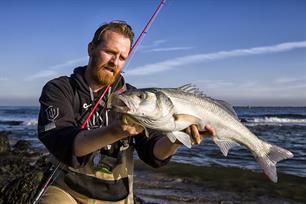
Recreational win on Bass – bag limit increase to 3 bass/angler
As part of the 2026 UK–EU Fisheries agreement, the recreational sea bass bag limit will increase to three fish per angler per day. The closed season (February–March) and the 42 cm minimum conservation reference size will remain in place for recreational and commercial fisheries alike.
This is a major win as for the past 6 years there were expansions in catch levels for the commercial fisheries sector, without improvements for the recreational fisheries.
So after years of hard-fought advocacy, the European Anglers Alliance (EAA) – by means of its members Angling Trust and Sportvisunie – welcome this improvement as a long-overdue recognition of the socio-economic value of recreational angling.
The current deal offers a vital boost for many recreational charter businesses and gives anglers the opportunity to take a little more home – especially at a time when food security matters more than ever. Of course, the EAA recognises that not every angler will land three fish every trip – but restoring the principle of fair access is a significant and symbolic step forward.
A stock showing signs of recovery – and new risks emerging
Following more than a decade of sacrifice by sea anglers, charter skippers, and responsible commercial fishers, bass stocks are showing encouraging signs of recovery. Many anglers and skippers have reported improved catches over the last two seasons – a trend supported by this year’s scientific advice.
In the advice for 2026 ICES has recommended that no more than 5,180 tonnes of bass should be removed in 2026 under the MSY approach – almost a doubling of the 2,776-tonne limit for 2025.
This is the result of an extensive ICES study this year into the state of the sea bass stock. ICES concluded that the stock is now above the lowest alert level – Btrigger – paving the way for more catches. The EAA is pleased with the increased bag limit for anglers, but is concerned about the accuracy of the stock estimates. The EAA has some doubts about the validity of the recent increase in the recreational share of total bass removals. These modelling shifts directly influence stock assessments and, if inaccurate, may overstate stock strength and introduce a risk of overharvesting.
Little wonder that the bigger seabass stock of the ICES advice goes accompanied with a record uncertainty in the precision of that model outcome.
Continuing to protect sea bass stocks
EAA’s call for restraint has contributed to the fact that the ICES advice has not been followed without further ado. The total expected catch in 2026 remains more than 15% below the ICES advice. The European Anglers Alliance will continue to advocate for restrictive measures to give the fragile stock recovery a chance. This remains necessary because there is already talk of removing all catch limits in the coming years. Unrestricted fishing will never go hand in hand with the sustainable sea bass management that we advocate for: a large stock with many large fish!
Both the UK and EU have agreed to major increases in commercial, supposedly unavoidable bycatch limits for trawlers and fixed-net fisheries.
Increasing bycatch limits does the opposite:
- It incentivises bycatch rather than discouraging it,
- Risks turning a bycatch allowance into a de-facto targeted fishery,
- Disadvantages sustainable hook-and-line commercial fishers, and
- Erodes the hard-won gains made by recreational anglers.
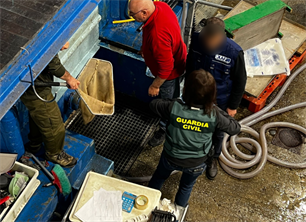
While we welcome the decision to keep catches 853 tonnes below the full scientific headroom, we remain worried that this may still encourage behaviour that puts the recovering stock at risk – particularly when enforcement remains chronically underfunded and ineffective – as our UK member Angling Trust writes.
Next steps
During the Agriculture and Fisheries Council meeting, taking place on 11 and 12 December, EU ministers will seek to reach a political agreement on the overall fishing opportunities in the Atlantic and the North Sea for fish stocks managed independently by the EU.
The figures for the EU-UK shared stocks will be incorporated into that overarching political agreement.
The new quotas – including bag limit for anglers – will apply from 1 January 2026.