Recently, dutch EAA member Sportvisunie managed to put an end to plans for a floating solar park on the Haarrijnseplas near Utrecht. A similar case is currently taking place in Drenthe. There, the Forestry Commission intends to build a solar park on the De Mussels fishing lake near Beilen. In this article, we will update you on this case and why recreational fisheries organisations are against floating solar parks on inland waters.
Case study – plans for floating solar park at “De Mussels” freshwater lake
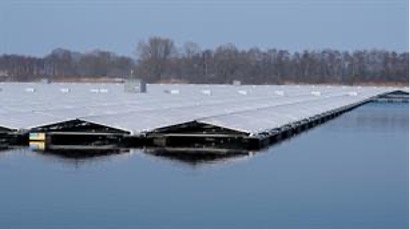 To achieve climate goals, Dutch governments such as provinces and municipalities want to generate more sustainable energy. This can be done in various ways, with solar energy in particular making a strong increase in recent years.
Larger initiatives – such as solar fields, floating or on land – must be carefully integrated – writes Sportvisunie. The government often looks for suitable parties and plans to generate sustainable energy. The municipality of Midden-Drenthe therefore issued a ‘social tender for solar parks‘ at the end of 2023. The search was for locations for solar parks on land. The municipality needs about 100 hectares, but plans were submitted for more than 1,000 hectares.
After the loss of the initial number one location, fishing lake “De Mussels” is now at the top for the installation of a new solar park.
The Dutch Forestry Commission (Staatsbosbeheer) owns “De Mussels”, EAA member Sportvisunie rents the fishing rights.
“In March 2025, Staatsbosbeheer presented the plans for this floating solar park to us and the local Fishing Association Beilen. Budget cuts are the reason: the organization is looking for extra income for the management of their nature reserves. But the new agreement – which included the intention to build a solar park on the lake – we did not accept on the advice of our lawyers” says Sportvisunie representative Albert Jan Scheper (Advisor Fish & Water – Sportvisunie regio Groningen Drenthe).
“In this context, Sportvisunie – including the local angling club HSV Beilen – firmly opposes this development as this unique water fulfills a very important recreational function for anglers and nature lovers. Both organisations are also seriously concerned about the underwater nature of this lake. With the plans for a solar park, a kind of sword of Damocles will hang over the fish stocks.” Says Gijs Wijnholts, president of HSV Beilen.
The tender is currently at a standstill. Research shows that De Mussels does not meet all the criteria. For example, there is already a floating solar park within 1 kilometre (Gat van Beugel), which is actually a ground for exclusion according to the rules.
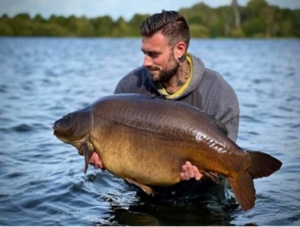
(c) Sportvisunie
Need for stakeholder – local – engagement
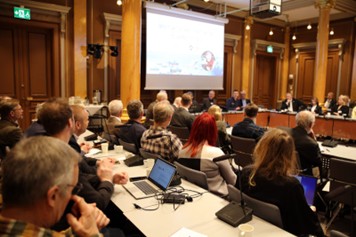
On January 13, Sportvisunie & HSV Beilen representatives Gijs Wijnholts, Herwin Kwint and Bart van Bezouw expressed their concerns during a committee meeting of the municipality.
Wijnholts: “De Mussels is one of the last unspoiled lakes in the region, with high natural values. Think of the otter, the beaver and various bird species. But also the fish stock and other marine life – a somewhat invisible underwater nature for many, which we as anglers are particularly fond of. For the more than 1,300 members of HSV Beilen, the largest sports club in the municipality, De Mussels is also an indispensable fishing water. It is of supra-regional importance for sport fishing, because Drenthe is a fairly water-poor, dry province. According to the plans, the floating solar park would only leave a strip of 25 meters along the banks of De Mussels free. De Mussels is a very important place for us as anglers, where young and old come into contact with each other and with nature.”
Why Sportvisunie is against floating solar parks
In locations without a natural function – such as sewage treatment plants, industrial basins and irrigation basins – solar energy on water is easy to explain. But the Sportvisunie is fundamentally against floating solar parks on non-industrial surface water.
Sportvisunie’s objections in brief are:
- Too little research has been done on long-term ecological effects
- Risk of contamination due to wear and tear or damage to materials
- Damage to fish stocks due to reduced light and disruption of ecosystems
- Loss of fishability and recreational value
- Damage to landscape and nature experience
- In violation of the national solar ladder (first use roofs, business parks and disturbed land)
The Sportvisunie believes that sustainable locations such as roofs, road verges and, for example, sewage treatment plants should be considered. Read more about Sportvisunie’s objections to floating solar parks here.
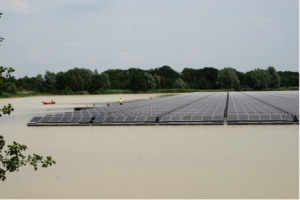
(c) Sportvisunie
What are the next steps for Sportvisunie?
The recreational fishing sector – via Sportvisunie – monitors throughout the Netherlands for interventions such as hydroelectric power stations, discharges and floating solar parks and takes action where necessary – up to and including legal proceedings – to prevent damage to fish stocks.
Ruben Bil, lawyer and board member of the Sportvisunie: “We have therefore also decided to take the necessary legal steps – such as objecting – in the event that Staatsbosbeheer nevertheless applies for an environmental permit for a solar park at De Mussels. For the time being, there is no such application. And we trust that it will not come to that because of the talks with the municipality.”
Recently, the Sportvisunie, together with the General Utrecht Anglers Association, successfully waged a legal battle against a solar park on the Haarrijnseplas near Utrecht (read more about it here).
Sources & further reading
- Source
- https://www.sportvisunie.nl/nl/nieuws-media/actualiteiten/streep-door-zonnepark-haarrijnseplas
- https://www.sportvisunie.nl/nl/nieuws-media/dossiers-onderzoeken/-nee-tegen-drijvende-zonneparken
- Application by the state of North Rhine-Westphalia to amend the Water Resources Act passes the Bundesrat – Case study from Germany (reported by German EAA member – DAFV)