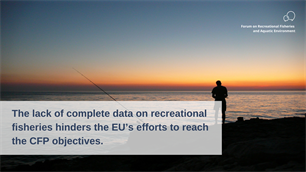
According to a study commissioned by the PECH Committee in 2017, Europe counts more than 9 million Europeans taking part in marine recreational fishing, generating a total economic impact 10.5 billion euros per year and supporting almost 100,000 jobs. In addition, EAA and EFTTA estimate that there are probably around 10 million recreational fishers that fish only in freshwater. Those numbers are only estimates, based on collated and compiled data and extrapolation for some Member States, with a particular lack of data around the Mediterranean and the Black Sea. It only gives a partial and imperfect picture, stressing the need for more data to be gathered on marine recreational fisheries’ environmental, social and economic impacts.
A pan-European survey on recreational fisheries every 5 years
Olivier Portrat, CEO of EFTTA speaking on behalf of both EAA and EFTTA underlined that “it is high time for the EU to collect more and better data on recreational fisheries, overcoming the only control-driven approach and the commercial fisheries frame of reference. Recreational angling generates high social and economic benefits, going far beyond the retail price of a fish. But this needs to be robustly and regularly assessed to inform EU policies and management measures.” He reiterated the sector’s call for a pan-European survey to be conducted every five years to evaluate the economic and social value of the sector.
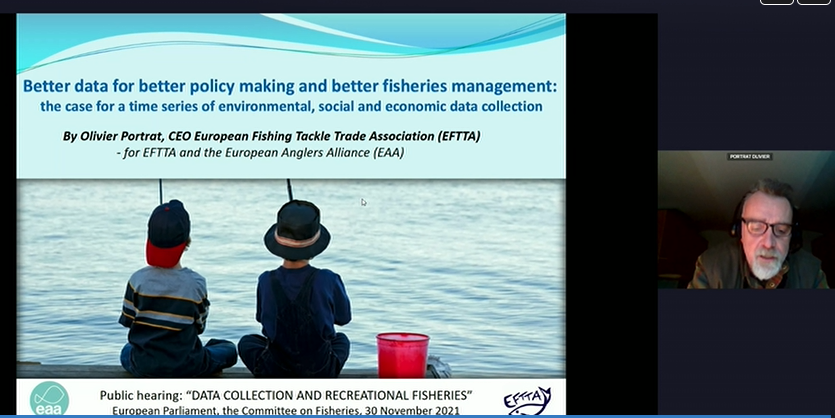
Better data for better management
Several experts were invited to give their perspective on the matter. Amongst them, Robert Arlinghaus, Leader of the Research Group Integrative Recreational Fisheries Management at the Leibniz Institute of Freshwater Ecology and Inland Fisheries, underlined the need to overcome the tendency to monitor only catches and provide some incentives for anglers to improve the data collection. He added that “there are way too many people involved in recreational fisheries to be disregarded or ignored from a policy point of view.” He made a strong case for the development of a genuine European policy framework for recreational fisheries.

Harry Strehlow, Leader Marine Recreational Fishery Research Group at the Thünen Institute of Baltic Sea Fisheries, highlighted that a fair and equitable access to resources, based on environmental and socio-economic data, would maximise benefits across sectors, for both the recreational and commercial fisheries sectors. He however underlined the need to understand well the difference between management goals for recreational fisheries and commercial fisheries: “MSY is not a relevant goal for recreational fisheries.”
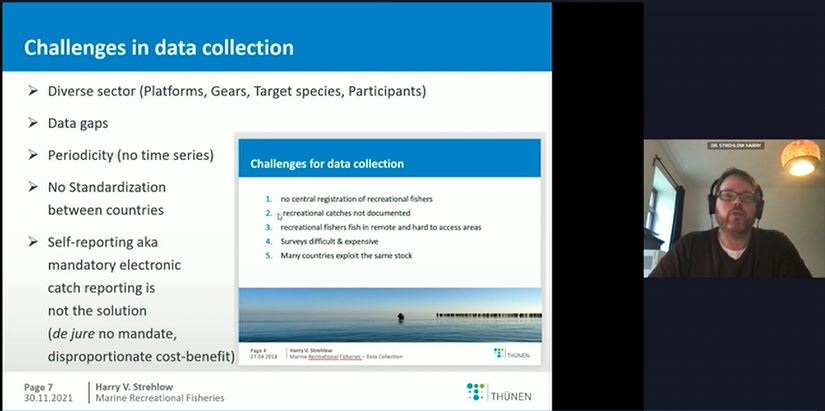
Two other experts, Henriques Filipe Henriques, data collector from Madeira, Portugal and Ana Gordoa, Principal Researcher at the Centre for Advanced Studies of Blanes focused on data collected in their respective regions and on the challenges of collecting data. They emphasised the diverse nature of recreational fisheries.
Include recreational fisheries in the Common Fisheries Policy
Commenting on the hearing, Fred Bloot (EAA President) and Florian Stein (EAA Board member and contact point for socioeconomics) echoed Olivier Portrat’s conclusion, insisting that “it is time to include the recreational fisheries sector in the Common Fisheries Policy. It would help to ensure a fair and sustainable public access to fish stocks and contribute to achieving environmental, economic and social sustainability for the benefit of coastal communities.”
This hearing showed that data collection and policy experts, as well as Members of the European Parliament were supporting two of the key EAA-EFTTA demands: collect more and better data on recreational fisheries including through a pan-European survey every five years and include recreational fisheries in the Common Fisheries Policy as a separate, fully acknowledged sector.
This hearing showed that data collection and policy experts, as well as Members of the European Parliament were supporting two of the key EAA-EFTTA demands: collect more and better data on recreational fisheries including through a pan-European survey every five years and include recreational fisheries in the Common Fisheries Policy as a separate, fully acknowledged sector.
EAA and EFTTA will keep on working with the European Parliament to ensure an adequate follow-up of the hearing on this important topic for the sector, including at the European Commission level.Link to the agenda of the hearing
Link to the speakers’ presentations
Link to the recording of the event
Check the live tweet of the RecFishing Forum
Link to the speakers’ presentations
Link to the recording of the event
Check the live tweet of the RecFishing Forum