The need for a European solution against increasing cormorant predation pressure is high
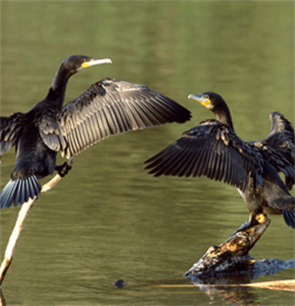
The Great Cormorant is a highly adaptable predatory bird that consumes between 400 and 600 grams of fish daily. With an estimated population of over 1.5 million individuals in Europe – a figure that has continued to rise – the species has become a growing concern for fish stocks and for the survival of vulnerable aquatic species such as eel, grayling, and salmon.
In their letter, MEPs further highlight that
“The EU Birds Directive has helped the Great Cormorant population recover, growing to over 1.5 million since 1980. However, this success is now causing a new ecological imbalance and unintended economic consequences… The amount of the estimated economic damages exceeds €350 million annually, €100 million alone for the recreational fisheries activities.”
Additionally, they add that
“While the protection of biodiversity continues to serve as a fundamental pillar of EU environmental policy, it is increasingly necessary to consider a more effective approach – one that ensures the continued conservation of avian species, such as the Great Cormorant, while also protecting fish stocks, aquatic biodiversity, food security, and economic resilience.”
This letter underlines that an EU-wide management strategy for the Great Cormorant species is a long overdue necessity and that the Commission must “bring forward without further delay a concrete and coordinated EU-level management solution” regarding the Great Cormorant species, this also building upon the 3 June Conference’s outcomes. The MEPs’ call for action highlights the urgent need to reconcile biodiversity goals with socioeconomic and environmental realities across Europe’s waters.
The signatories call for immediate action that ensures the species’ continued favourable conservation status while addressing the significant pressures it places on fish stocks, aquatic biodiversity, and the sustainability of related economic activities, such as recreational fisheries.
EAA’s efforts pays off – 10 MEPs underscore need for further action to protect and re-balance ecological systems
The open letter was drafted by members of EAA’s board as a follow-up activity to the 03 June event. After completion, and in close contact with Members of the European Parliament, the EAA – thanks to its lobby partner Aliénor – successfully gathered the support of ten MEPs who co-signed the letter.
Together with the MEPs, the European Anglers Alliance (EAA) wish to underlined the need for the development of a pan-European management plan and improved scientific data collection.
The EAA reaffirms its commitment to the EU Birds Directive and to achieving a sustainable balance between bird conservation and the protection of fish populations and aquatic ecosystems.
Read the full letter – signed by 10 MEPs – below.
DOWNLOAD THE LETTER VIA THIS LINK
The signing MEPs are:
- Progressive Alliance of Socialists and Democrats (S&D)
- Sofie Eriksson (Sweden)
- Hélène Fritzon (Sweden)
- Eero Heinäluoma (Finland)
- Renew Europe
- Asger Christensen (Denmark)
- European People’s Party (EPP)
- Niclas Herbst (Germany)
- Gabriel Mato (Spain)
- Jessica Poljärd (Sweden)
- Sander Smit (The Netherlands)
- Flavio Tosi (Italy)
- European Conservatives and Reformists Group (ECR)
- Bert-Jan Ruissen (The Netherlands)